Introduction
Sociology is a broad field of social science that studies society, social relationships, institutions, human behavior, and social processes. Because society consists of many different aspects of human life, sociology has developed into various specialized branches. Each branch focuses on a particular area of social life and helps us understand how different parts of society function and influence human behavior.
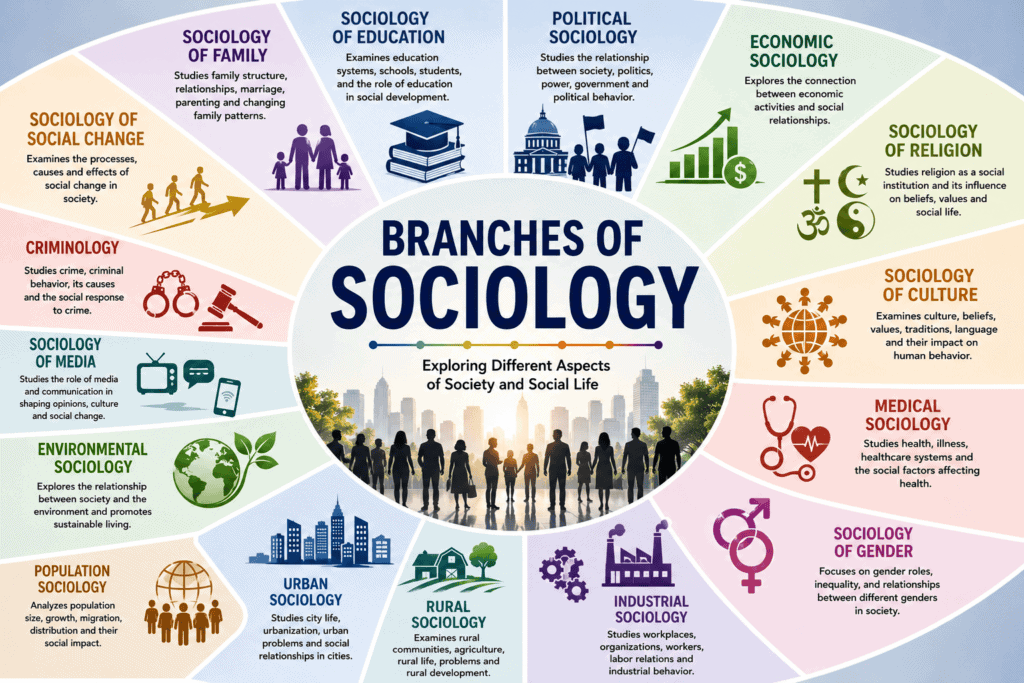
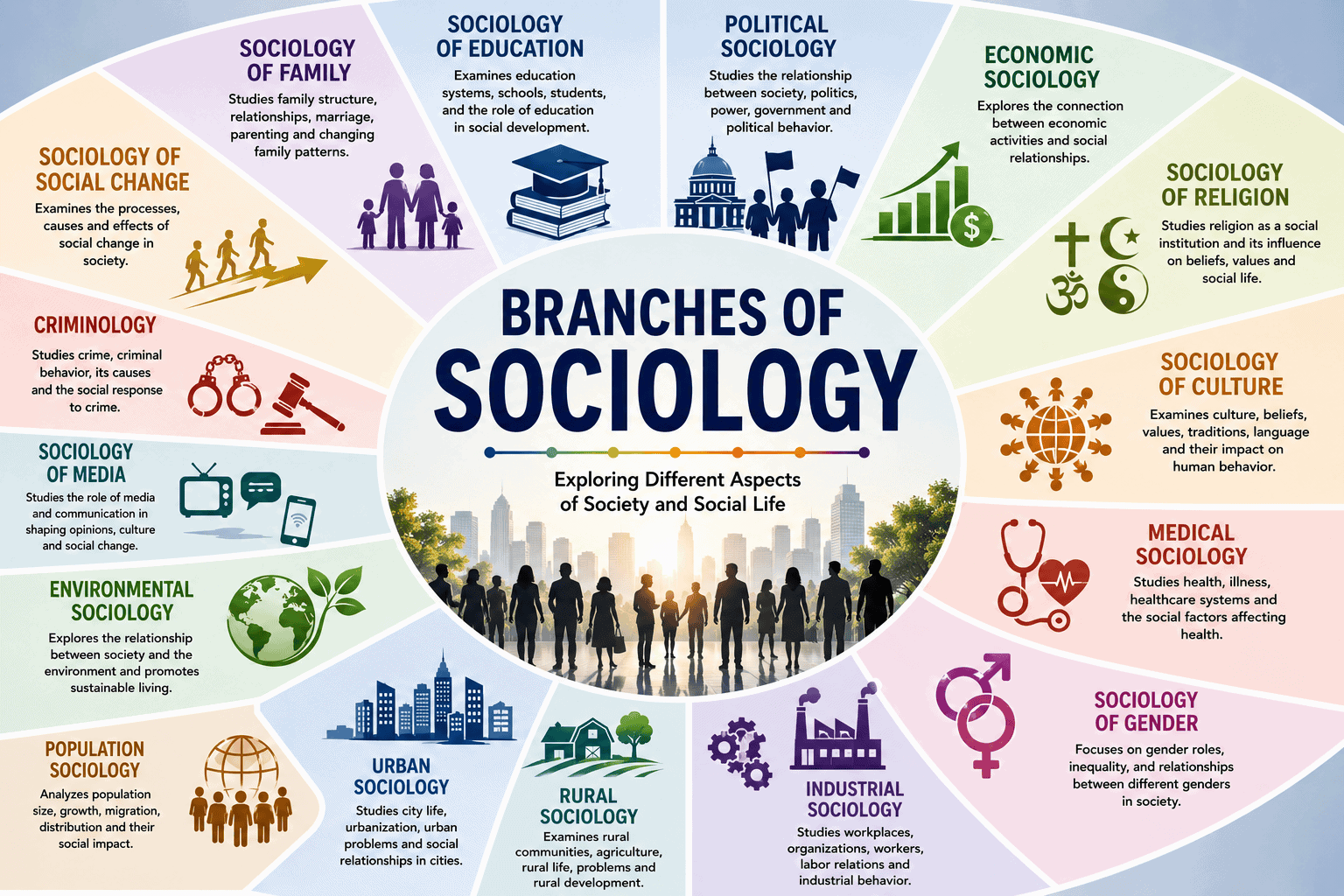
The branches of sociology allow sociologists to study social issues in a more organized and detailed way. These branches examine topics such as family, education, religion, politics, economy, health, culture, gender, population, and social change.
Sociology of Family
The sociology of family is one of the most important branches of sociology that studies the family as a social institution. It examines family structures, marriage systems, relationships among family members, parenting practices, and changes in family patterns.
This branch explores how families influence individual development, social values, and cultural traditions. It also studies modern issues such as changing family roles, divorce, single-parent families, and the impact of social and economic changes on family life.
Sociology of Education
Sociology of education focuses on the relationship between education and society. It studies educational institutions, teaching systems, student behavior, and the role of education in social development.
This branch examines how education contributes to socialization and prepares individuals for their roles in society. It also studies educational inequalities, differences in access to education, the relationship between education and social mobility, and how schools reproduce or reduce social inequalities.
Political Sociology
Political sociology studies the relationship between society, politics, and power. It examines political institutions, governments, leadership, authority, political behavior, and the influence of social groups on political systems.
This branch helps us understand topics such as social movements, elections, political participation, democracy, power relations, and the relationship between citizens and the state.
Political sociology also explores how factors such as class, gender, ethnicity, and social background influence political opportunities and decision-making.
Economic Sociology
Economic sociology studies the relationship between economic activities and social life. It examines how economic systems influence social relationships and how social factors affect economic behavior.
This branch focuses on topics such as work, occupations, industries, markets, poverty, unemployment, and economic inequality. It explains that economic activities are not separate from society but are influenced by culture, institutions, and social relationships.
Sociology of Religion
The sociology of religion studies religion as a social institution and examines its role in society. It focuses on religious beliefs, practices, organizations, and the influence of religion on social behavior.
This branch explores how religion contributes to social unity, provides moral values, shapes identities, and influences social norms. It also studies religious diversity, secularization, religious conflicts, and the relationship between religion and social change.
Sociology of Culture
Sociology of culture examines cultural patterns, beliefs, values, traditions, customs, language, and lifestyles within societies. It studies how culture is created, shared, maintained, and changed over time.
This branch explains how culture influences human behavior and shapes people’s identities. It also studies cultural differences, globalization, popular culture, and cultural conflicts.
Medical Sociology
Medical sociology, also known as sociology of health and illness, studies the relationship between society and health. It examines how social factors influence health conditions, healthcare systems, and people’s experiences of illness.
This branch studies issues such as healthcare inequality, doctor-patient relationships, social causes of diseases, public health challenges, and the impact of social class, gender, and environment on health outcomes.
Sociology of Gender
Sociology of gender studies the social construction of gender roles and relationships between different genders in society. It examines how societies create expectations about masculinity and femininity and how these expectations influence people’s opportunities and experiences.
This branch focuses on topics such as gender inequality, gender roles, discrimination, workplace participation, family responsibilities, and social movements related to gender rights.
Industrial Sociology
Industrial sociology studies the relationship between society and the workplace. It focuses on organizations, workers, labor relations, management systems, and workplace behavior.
This branch examines issues such as job satisfaction, workplace culture, industrial conflicts, trade unions, and the effects of technological changes on workers and organizations.
Rural Sociology
Rural sociology studies rural communities, agricultural societies, and the social problems of rural populations. It examines rural lifestyles, traditions, social relationships, and patterns of development.
This branch focuses on issues such as rural poverty, migration, agricultural change, community development, and differences between rural and urban societies.
Urban Sociology
Urban sociology studies cities and urban life. It examines population growth, urbanization, social relationships in cities, and problems associated with urban development.
This branch focuses on issues such as overcrowding, housing problems, crime, migration, social diversity, and the impact of modernization on urban communities.
Population Sociology (Demography)
Population sociology studies population characteristics and changes within societies. It examines birth rates, death rates, migration, population growth, and population distribution.
This branch helps understand how population changes affect social institutions, economic development, and public policies.
Environmental Sociology
Environmental sociology studies the relationship between society and the natural environment. It examines how human activities affect the environment and how environmental changes influence social life.
This branch focuses on topics such as climate change, pollution, environmental movements, sustainable development, and social responses to environmental problems.
Sociology of Media
Sociology of media studies the role of communication and media in society. It examines how newspapers, television, films, and social media influence beliefs, attitudes, culture, and social behavior.
This branch explores topics such as media influence, public opinion, digital society, misinformation, and the relationship between media and social change.
Criminology
Criminology is a branch of sociology that studies crime, criminal behavior, and social factors related to crime. It examines why people commit crimes and how society responds to criminal activities.
This branch studies issues such as law enforcement, punishment systems, juvenile delinquency, social causes of crime, and crime prevention.
Sociology of Social Change
This branch focuses on the processes through which societies transform over time. It studies the causes, patterns, and consequences of social change.
Sociologists examine how technology, globalization, political movements, economic development, and cultural changes influence societies.
Conclusion
The branches of sociology provide a comprehensive understanding of different aspects of social life. Each branch examines a specific area of society while also showing how different social factors are connected with each other. From family and education to politics, economy, health, culture, and social change, sociology helps us understand the complex nature of human society.
By studying these branches, sociologists can identify social problems, explain social behavior, and contribute to the development of better policies and solutions for improving society.