Introduction
Conflict Theory is one of the major theoretical perspectives in sociology that explains society through the lens of inequality, competition, power, and social change. Unlike functionalism, which focuses on social stability and cooperation, conflict theory emphasizes disagreements and struggles between different groups in society over resources, wealth, power, and opportunities.
According to conflict theorists, society is not always based on harmony and agreement. Instead, it consists of different groups that have unequal access to resources and compete with each other to protect or improve their social positions. Social change occurs when less powerful groups challenge existing inequalities and demand transformation.
Conflict theory is especially associated with the ideas of Karl Marx, who analyzed society through the relationship between economic classes and the struggle between those who control resources and those who work for them.
Definition of Conflict Theory
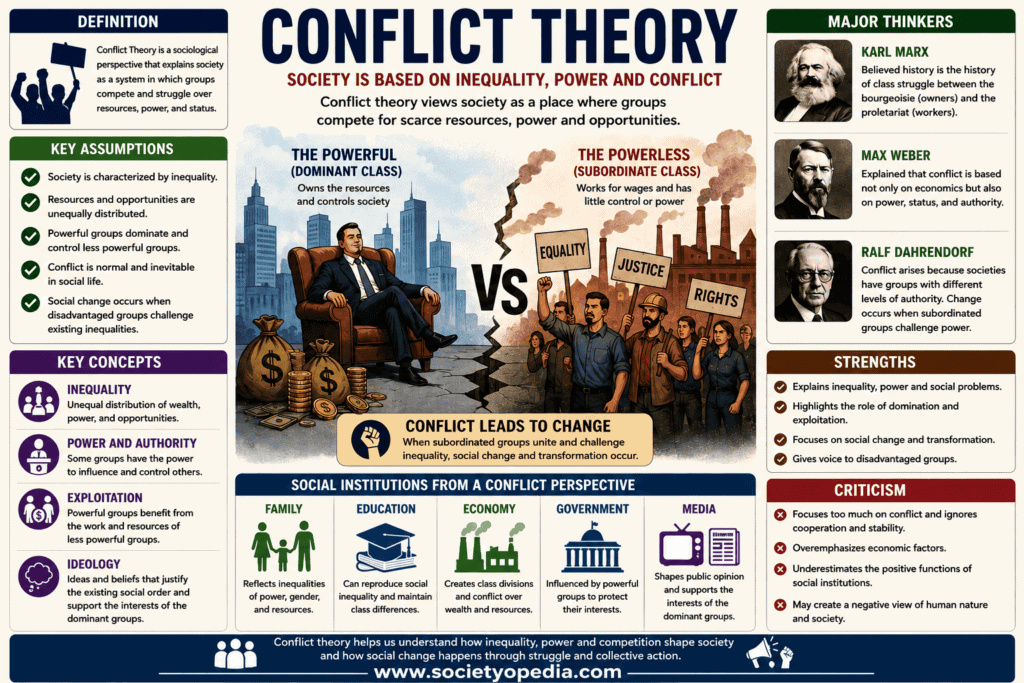
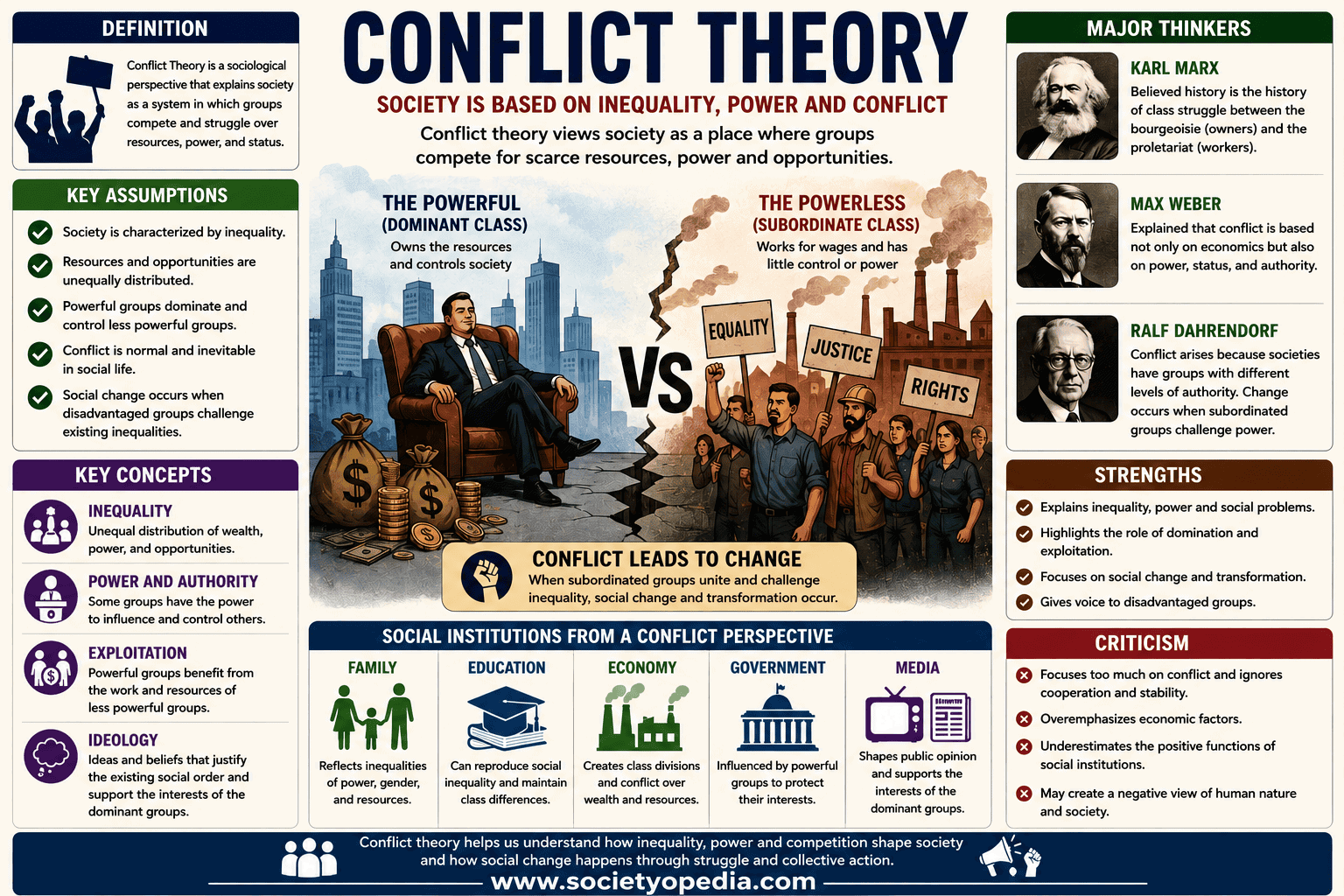
Conflict Theory is a sociological perspective that views society as a system characterized by inequality, competition, and conflict among different social groups.
According to Karl Marx, society is divided into different classes that struggle with each other because of unequal ownership and control of economic resources. Marx believed that history is shaped by conflicts between social classes.
According to Max Weber, social conflict is not only based on economic differences but also involves power, status, and political influence. Weber expanded conflict theory by explaining that inequality exists in different forms.
According to Ralf Dahrendorf, conflict arises because societies contain groups with different levels of authority and power. Those who hold authority try to maintain their position, while others challenge existing power structures.
In simple words, conflict theory explains society as a place where groups compete for resources, influence, and opportunities.
Historical Background of Conflict Theory
The foundation of conflict theory is strongly connected with the work of Karl Marx during the nineteenth century. Marx studied the effects of capitalism and argued that society is divided mainly into two major classes: the bourgeoisie and the proletariat.
The bourgeoisie are the owners of industries and economic resources, while the proletariat are workers who sell their labor. Marx argued that the interests of these two groups are different, creating continuous conflict.
Later sociologists expanded conflict theory beyond economic class and examined other forms of inequality related to gender, race, politics, education, and social status.
Main Assumptions of Conflict Theory
Conflict theory is based on the idea that society is characterized by inequality. Different groups do not have equal access to wealth, power, and opportunities.
Conflict theorists believe that social structures often benefit powerful groups while creating disadvantages for less powerful groups.
According to this perspective, power plays a central role in society. Groups with greater power influence laws, institutions, and social values according to their interests.
Conflict is considered a normal and necessary part of social life. It can create social change by challenging unfair systems and encouraging reforms.
Social change occurs when disadvantaged groups organize and challenge existing patterns of inequality.
Functionalism Theory in Sociology: Definition, Concepts, Assumptions, Features and Criticism
Major Concepts of Conflict Theory
Social Inequality
Social inequality refers to unequal distribution of resources, opportunities, and privileges among individuals and groups.
Conflict theorists study how differences in wealth, education, occupation, gender, and social status create unequal life experiences.
Power and Authority
Power refers to the ability of individuals or groups to influence decisions and control resources.
Conflict theory examines how powerful groups maintain their position and how weaker groups challenge authority.
Social Class
Karl Marx emphasized social class as a central concept of conflict theory. He argued that economic systems create divisions between groups with different interests.
In capitalist societies, conflict exists between those who own production resources and those who provide labor.
Exploitation
Conflict theorists argue that powerful groups may benefit from the work and resources of less powerful groups. Marx used the concept of exploitation to explain the relationship between capitalists and workers.
Ideology
Ideology refers to ideas and beliefs that justify existing social arrangements. Conflict theorists argue that dominant groups often promote ideas that support their interests and maintain their power.
https://societyopedia.com/symbolic-interactionism-theory-in-sociology/
Conflict Theory and Social Institutions
Family
Conflict theorists argue that family can reflect social inequalities related to gender, economic status, and power relationships.
They study how family roles and responsibilities may create unequal opportunities between different members.
Education
Conflict theory views education as a system that can reproduce social inequality. Schools may provide opportunities, but differences in family background, wealth, and resources can influence educational success.
According to conflict theorists, education may sometimes maintain existing class differences.
Economy
The economy is a central focus of conflict theory. Marx argued that economic systems influence social relationships and create divisions between social classes.
Conflict theorists examine issues such as unemployment, poverty, labor exploitation, and economic inequality.
Government and Politics
Conflict theory argues that political systems are influenced by power relations. Powerful groups may use political institutions to protect their interests.
It studies how laws, policies, and political decisions affect different social groups.
Media
Conflict theorists examine how media can influence public opinion and promote ideas that support dominant groups.
They study how ownership and control of media influence the information people receive.
Karl Marx’s Class Conflict Theory
Karl Marx explained that human history is a history of class struggles. He believed that societies develop through conflicts between groups with opposing economic interests.
In capitalist society, Marx identified two major classes:
The bourgeoisie control factories, businesses, and resources.
The proletariat work for wages and produce goods but have limited control over production.
Marx believed that this inequality would eventually create conflict and lead to social transformation.
Types of Social Conflict
Economic conflict occurs because of unequal distribution of wealth and resources.
Political conflict develops when groups compete for power and influence.
Cultural conflict occurs when different groups have opposing values, beliefs, or identities.
Gender conflict focuses on inequalities between men and women and unequal access to opportunities.
Importance of Conflict Theory
Conflict theory helps explain social inequality and why some groups have more advantages than others.
It provides a deeper understanding of issues such as poverty, discrimination, class differences, and unequal opportunities.
The theory highlights the role of power in shaping social institutions and social relationships.
Conflict theory also explains social change by showing how struggles between groups can lead to reforms and improvements.
Strengths of Conflict Theory
Conflict theory effectively explains inequality, power relationships, and social struggles.
It draws attention to disadvantaged groups and encourages examination of unfair social conditions.
The theory helps researchers study issues related to class, gender, race, and political power.
It provides an explanation of social change by focusing on conflicts that challenge existing systems.
Criticism of Conflict Theory
One major criticism of conflict theory is that it focuses too much on conflict and inequality while ignoring cooperation and social stability.
Critics argue that society is not always based on competition because people often cooperate and share common values.
Some critics believe conflict theory gives too much importance to economic factors and does not fully explain cultural and personal influences on behavior.
The theory may underestimate the positive functions of social institutions such as family, education, and religion.
Conclusion
Conflict Theory is an important sociological perspective that explains society through inequality, power, and competition among groups. Developed mainly from the ideas of Karl Marx, it highlights how resources and opportunities are unevenly distributed and how these inequalities create social struggles.
Although conflict theory has been criticized for focusing heavily on inequality and conflict, it remains valuable for understanding social problems, power relations, and processes of social change. It helps sociologists analyze how societies are organized and how different groups work to improve their social conditions.