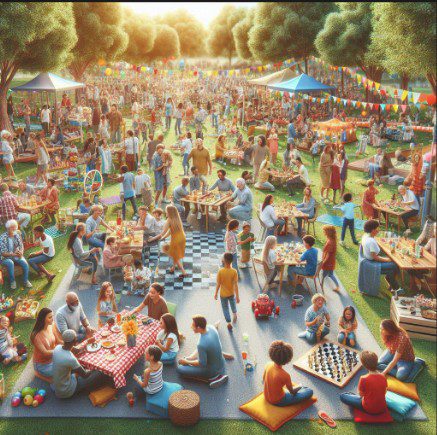
Pakistan has a mixed socio-geographical structure, comprising both rural and urban societies. According to recent estimates, around 63-65% of Pakistan’s population lives in rural areas, while the remaining 35-37% lives in urban centers. The division significantly influences economic activities, social structures, access to services, and cultural practices.
Rural Society
Rural areas consist of villages or small settlements, where the primary livelihood is agriculture or related activities.
Characteristics of Rural Society
Agrarian Economy: Main occupations include farming, livestock rearing, and fishing.
Community-Oriented Life: Strong social bonds, with extended families and kinship playing a central role.
Traditional Values: Conservative lifestyle with strong influence of customs, religion, and local elders.
Limited Access to Services: Often lack in modern infrastructure, such as healthcare, education, and transportation.
Low Literacy Rates: Educational facilities are often basic or unavailable.
Jirga/Panchayat System: Informal justice systems still play a role in conflict resolution.
Gender Roles: Clearly defined, with women often confined to domestic and agricultural roles.
Cultural Aspects
Rich in folk traditions, oral literature, local festivals, and traditional crafts.
Dress and language are highly influenced by regional identity.
Urban Society
Urban areas include cities and towns with industrial, commercial, and administrative functions.
Characteristics of Urban Society
Diverse Economy: Employment in industry, services, business, and government sectors.
Individualistic Lifestyle: Greater focus on nuclear families and personal achievements.
Modern Infrastructure: Better access to healthcare, education, transportation, and technology.
Higher Literacy Rates: Greater educational opportunities and awareness.
Cultural Pluralism: Exposure to different cultures, ethnicities, and lifestyles.
Law Enforcement System: Reliance on formal legal systems over traditional justice.
Evolving Gender Roles: Women have more participation in the workforce and public life.
Social Challenges
Urbanization issues: Overcrowding, pollution, traffic congestion, slums.
Social Stratification: Clear economic divisions, e.g., elite vs. lower-income groups.
Key Differences: Rural vs. Urban Society
| Aspect | Rural Society | Urban Society |
|---|---|---|
| Economy | Agriculture-based | Industry and service-based |
| Social Structure | Traditional, kinship-based | Modern, individualistic |
| Infrastructure | Limited | Advanced |
| Education | Lower literacy rates | Higher literacy and access |
| Healthcare | Often inadequate | Better facilities |
| Culture | Folk traditions, local festivals | Diverse and cosmopolitan |
| Governance | Informal systems (Jirga/Panchayat) | Formal legal and administrative |
The rural-urban divide is a major determinant of socioeconomic conditions in Pakistan.
Rural society is traditional, agriculture-driven, and less developed in terms of infrastructure and education.
Urban society is modern, diverse, and benefits from more advanced services and opportunities.